Week 7: From Demo to Narrative
Post-Demo Day reflection: shifting from technical showcase to guided experience with spatial narration, curated spaces, and lighting design.
March 16, 2026
Overview
Demo Day (Week 6) proved the system works: onboarding, carousel, level streaming, 3DGS, hand gestures. But it also revealed a core problem: the experience has no narrative. With 19 spaces to choose from, visitors don’t know why they’re entering a place or what to feel. The technology is there. Now it needs a soul.
This week is Spring Break. Time to step back, reflect, and plan the second half.
Pre-Demo Day Documentation
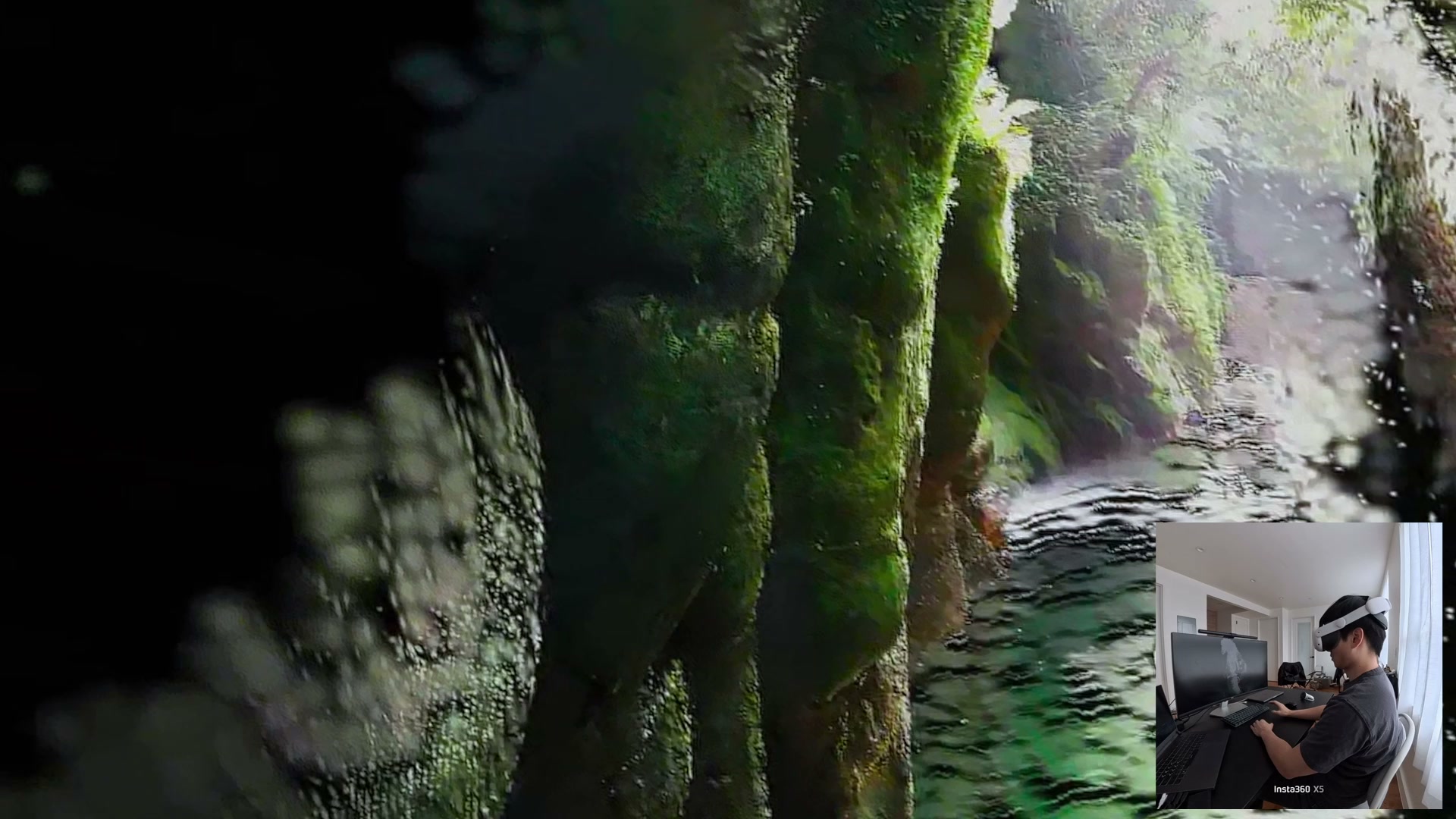
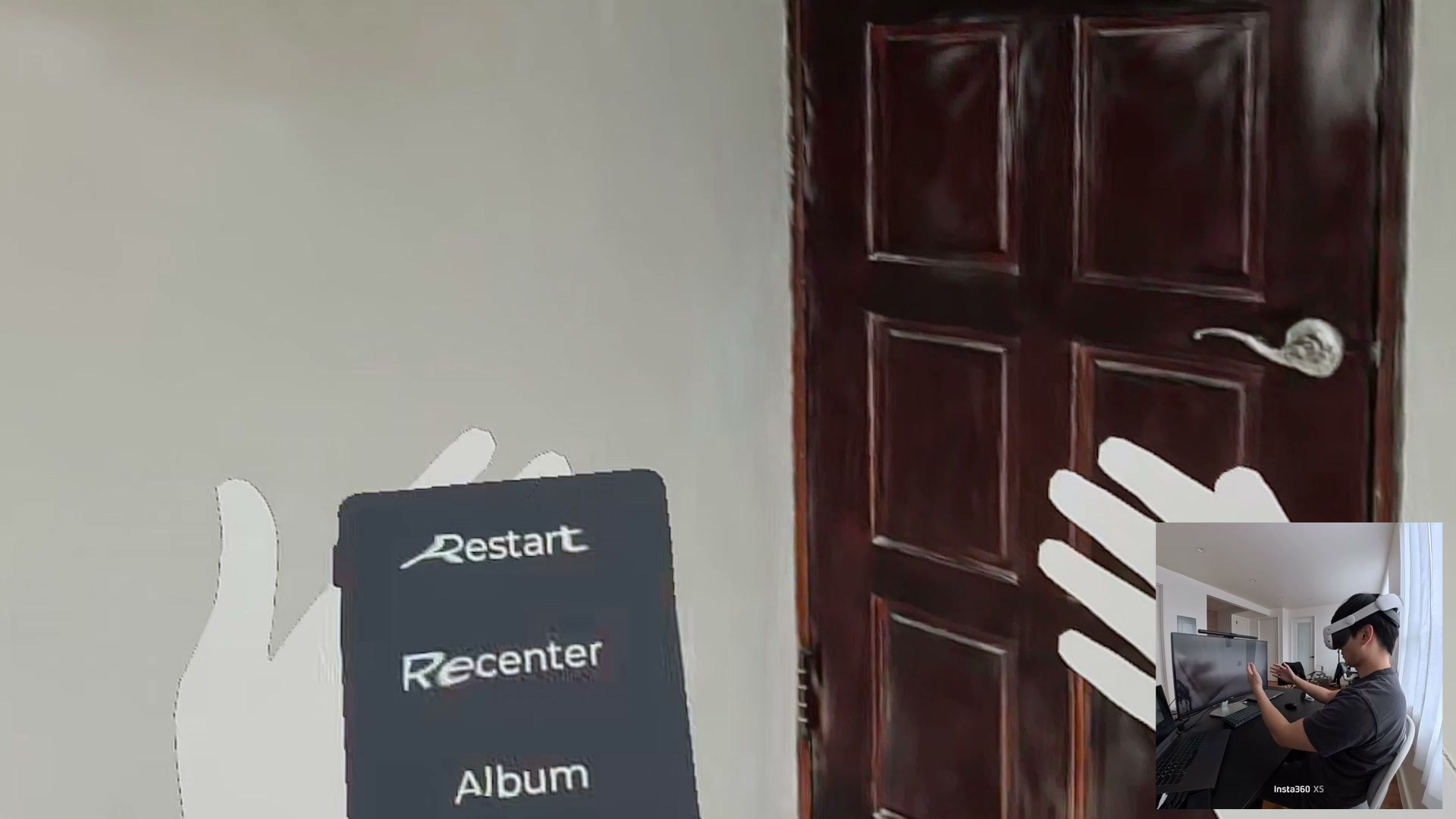
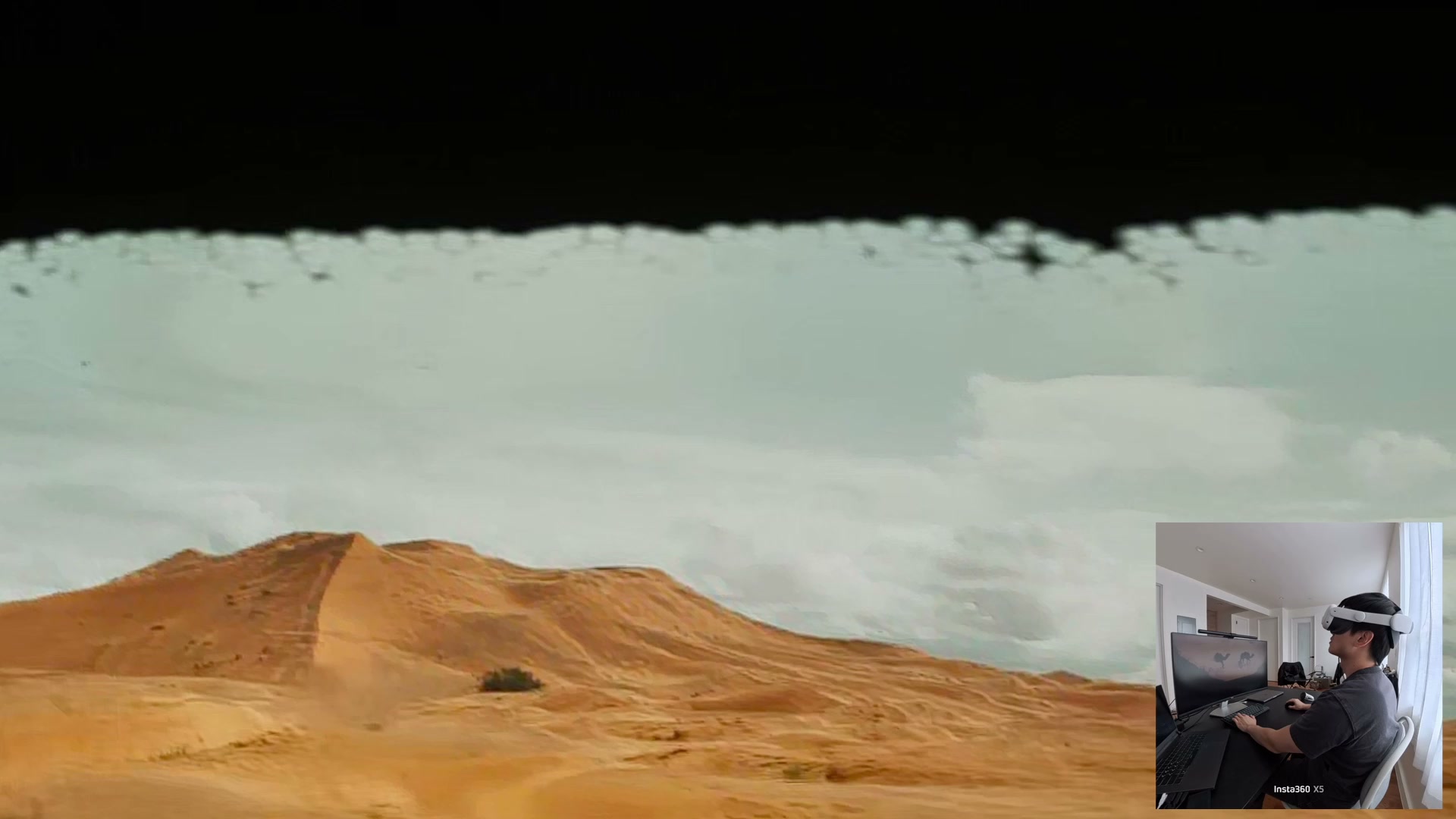
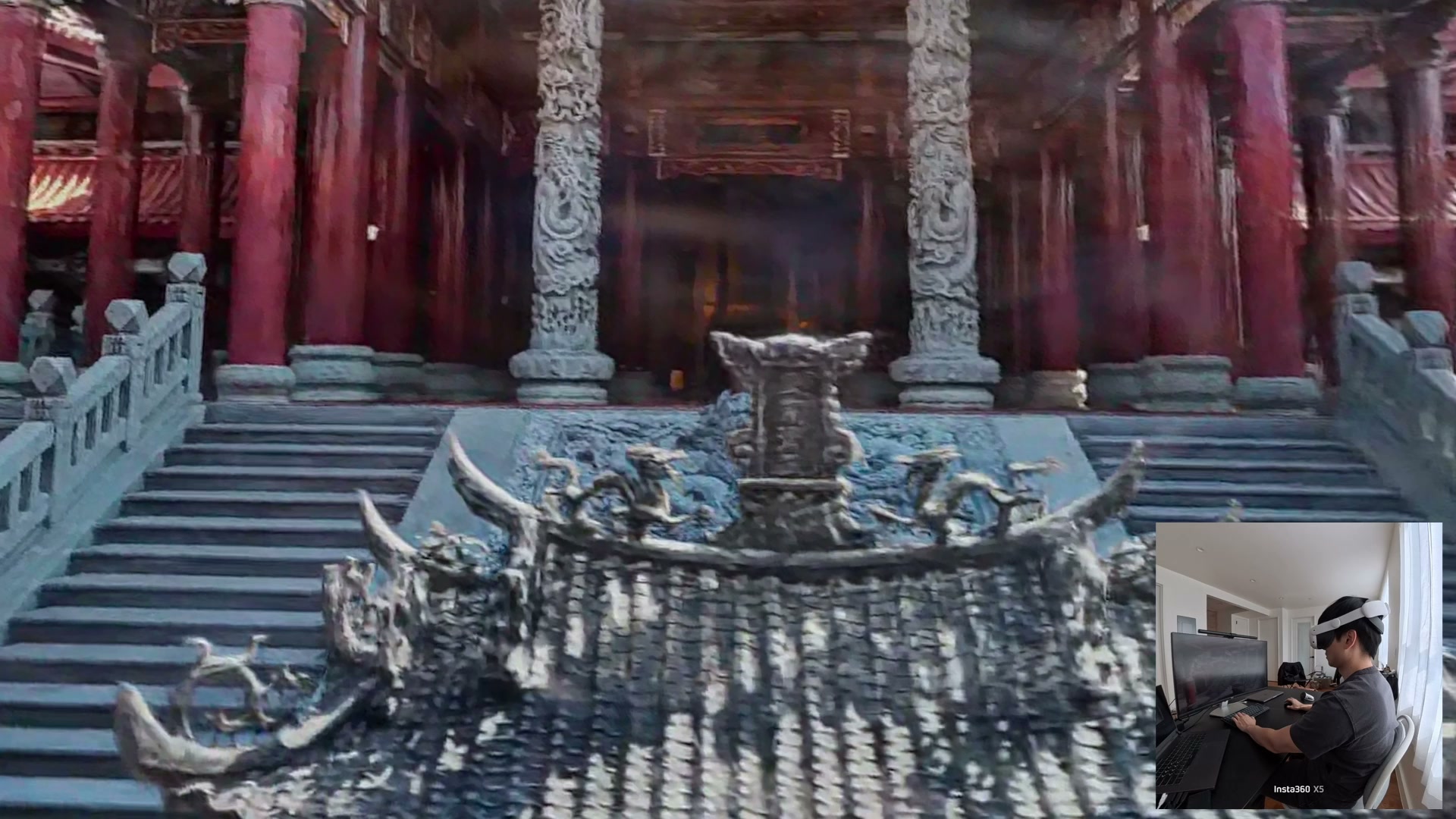
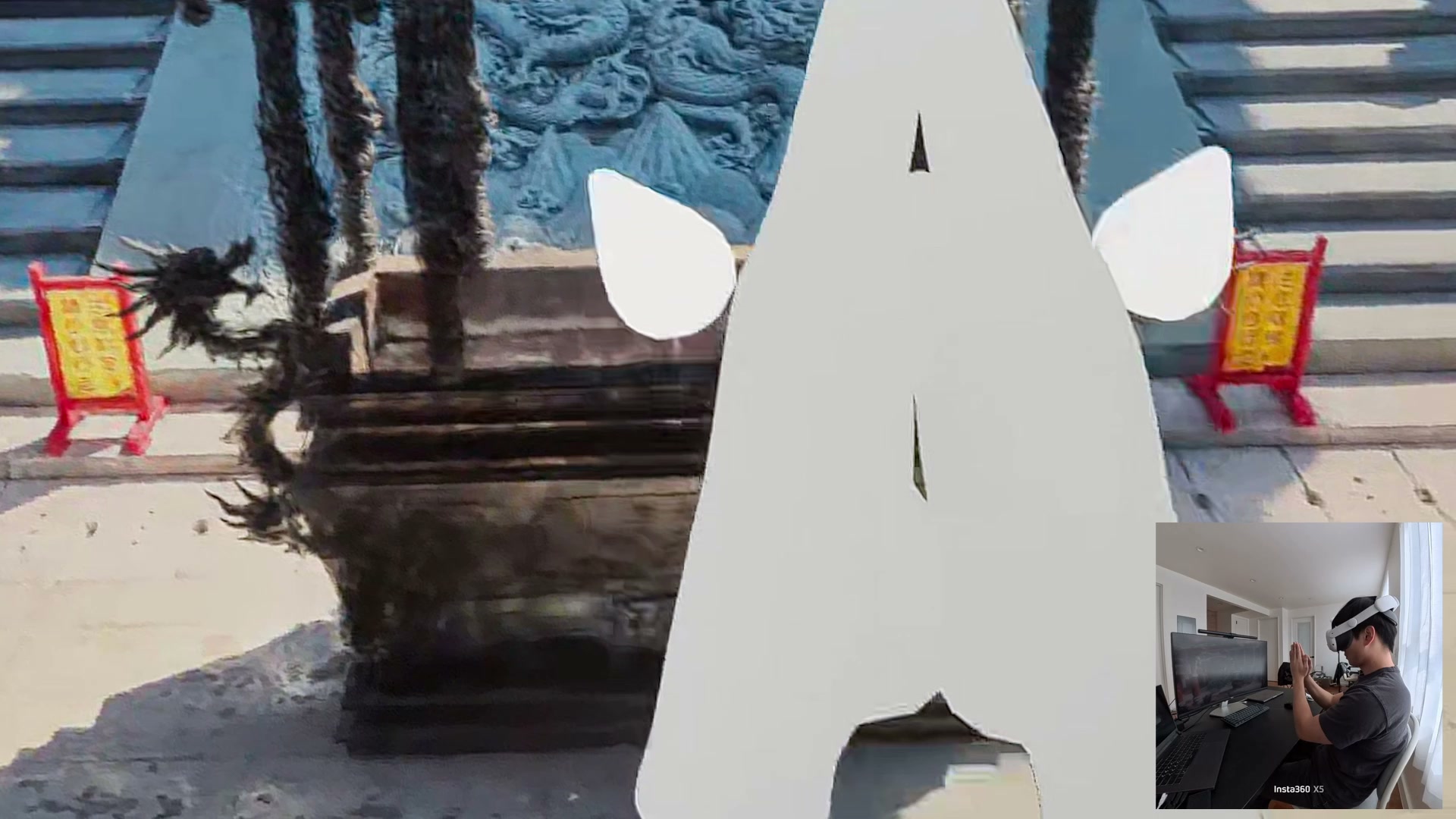
Two VR test sessions recorded before Demo Day, showing the complete experience flow.
Test 1: Full Experience Flow
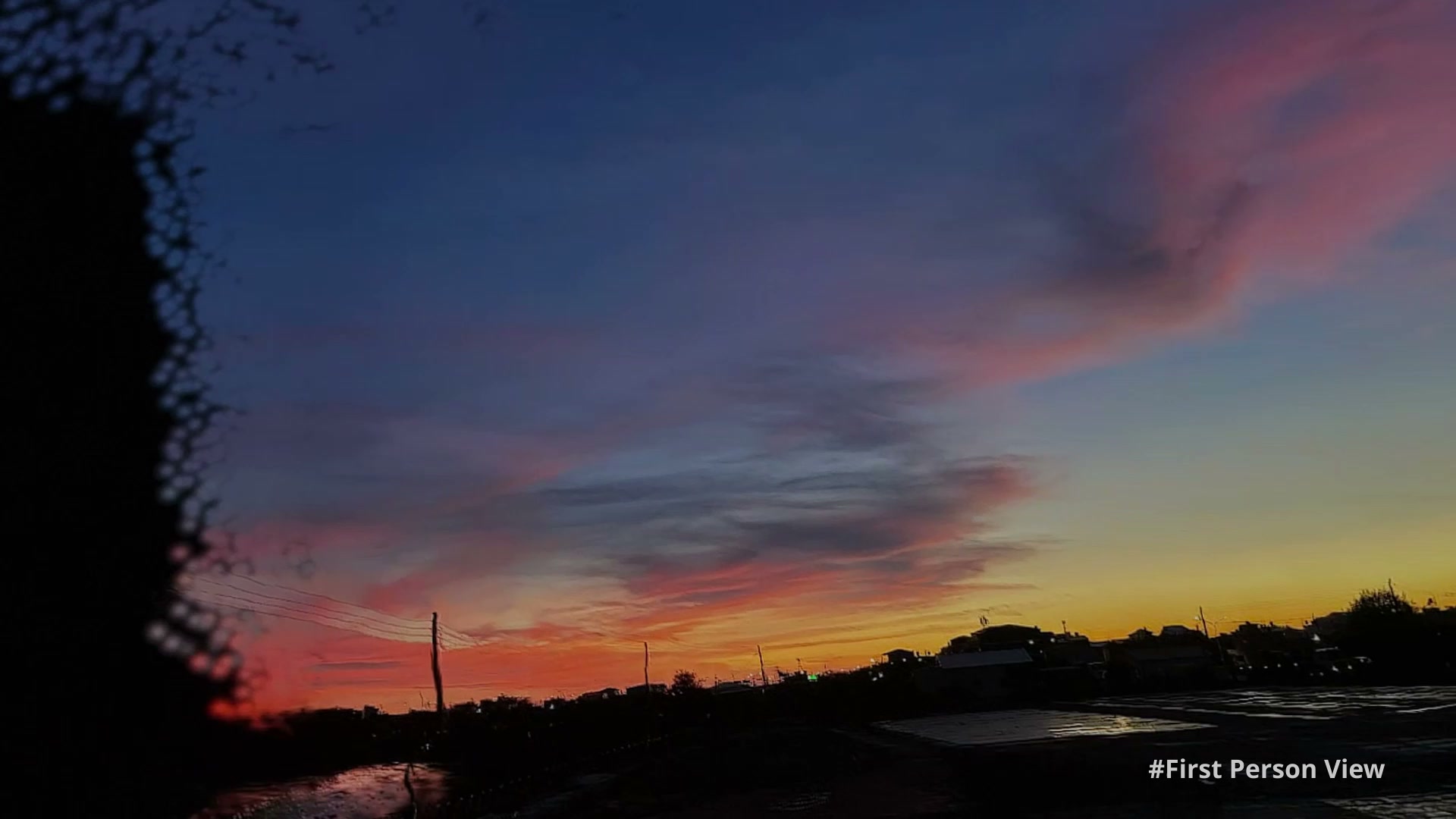
Onboarding
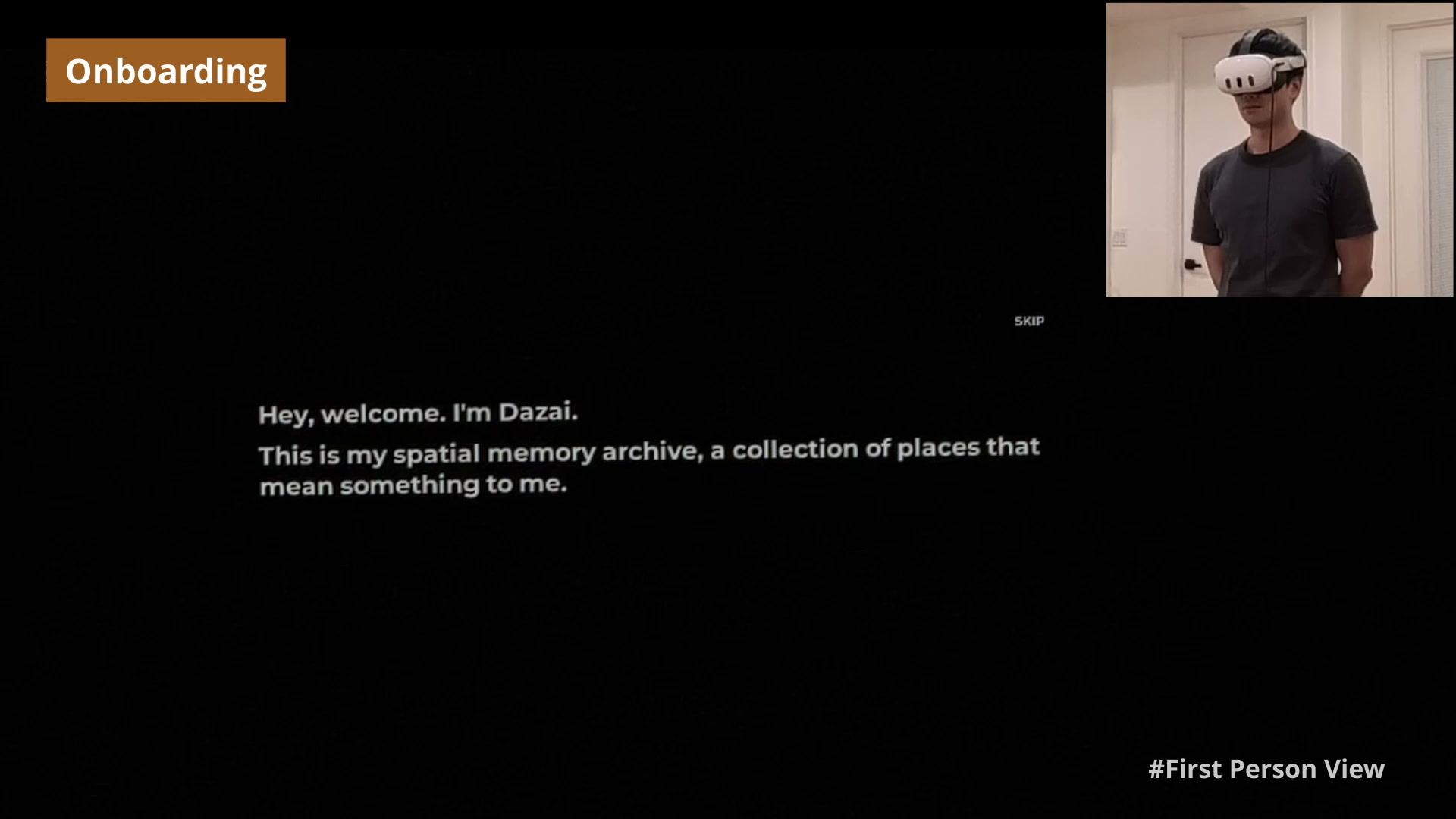
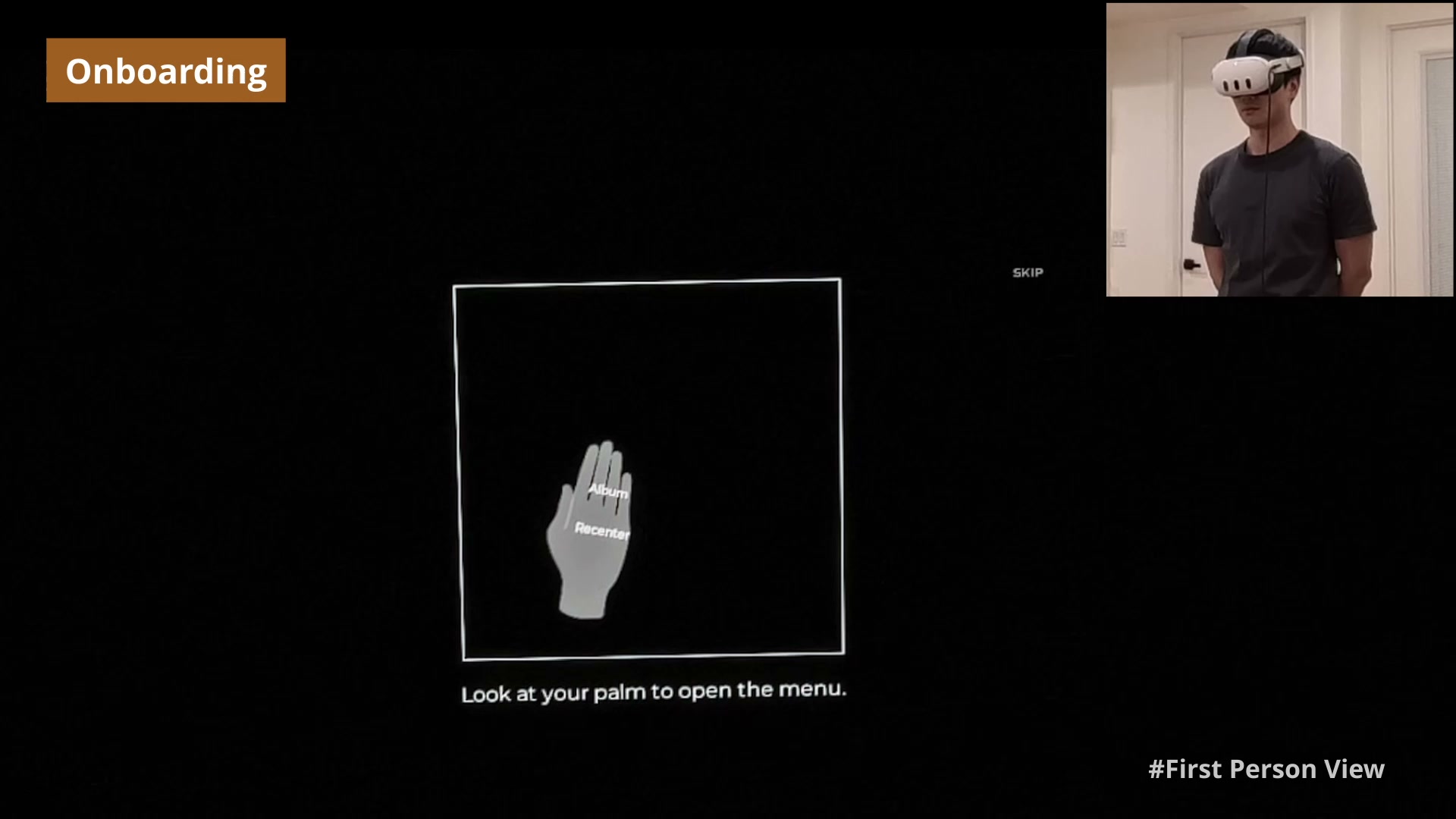
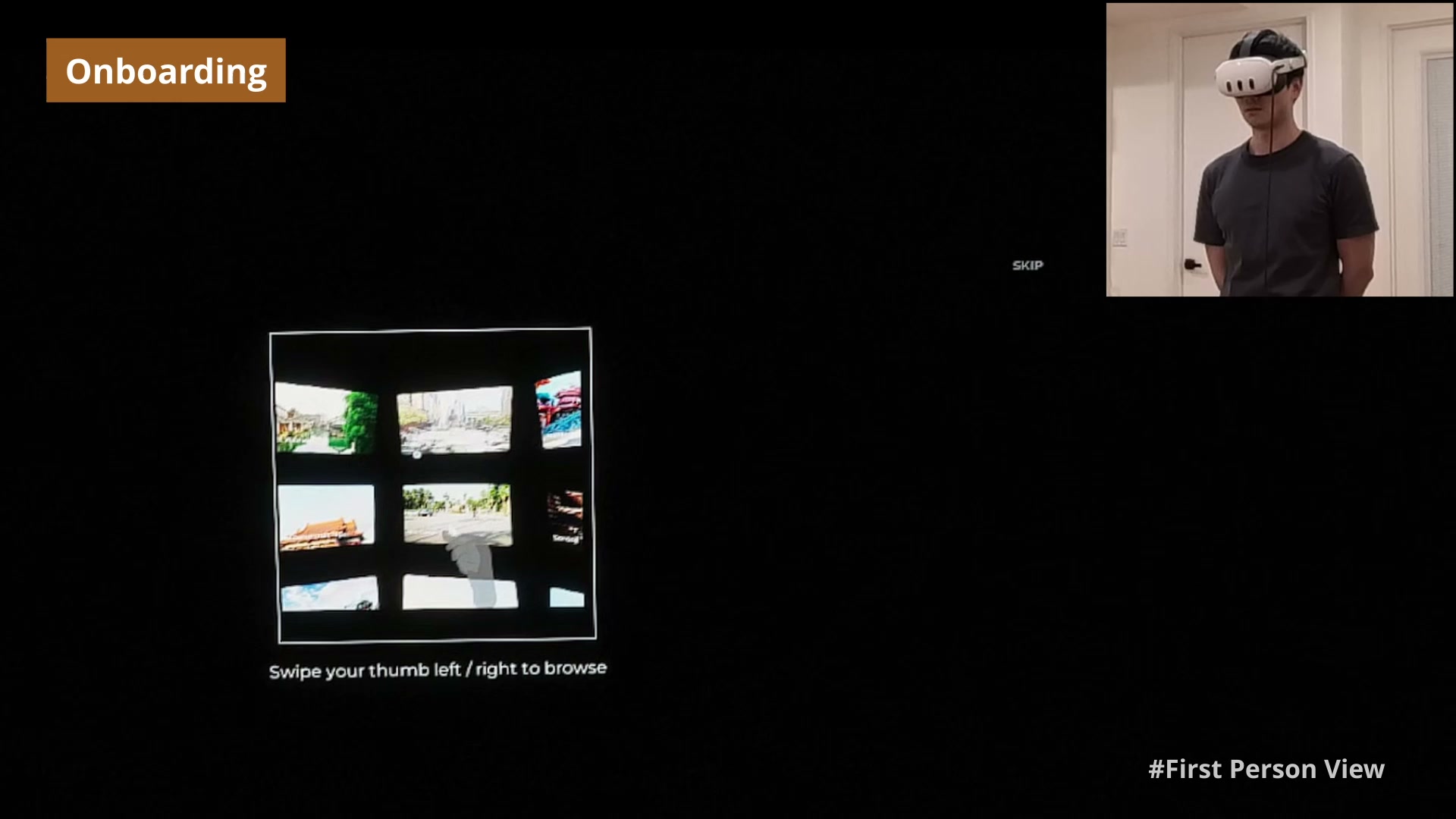
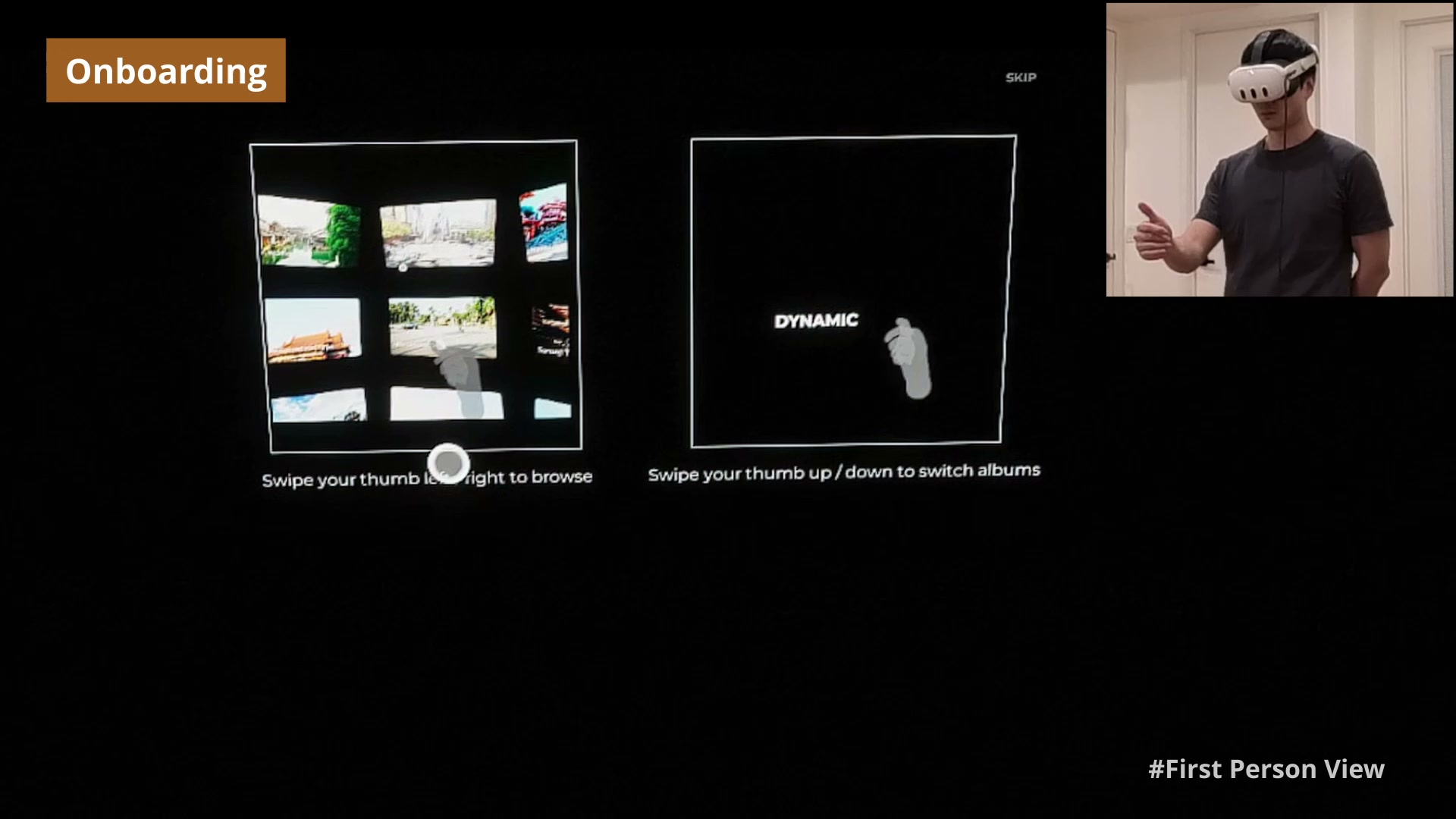
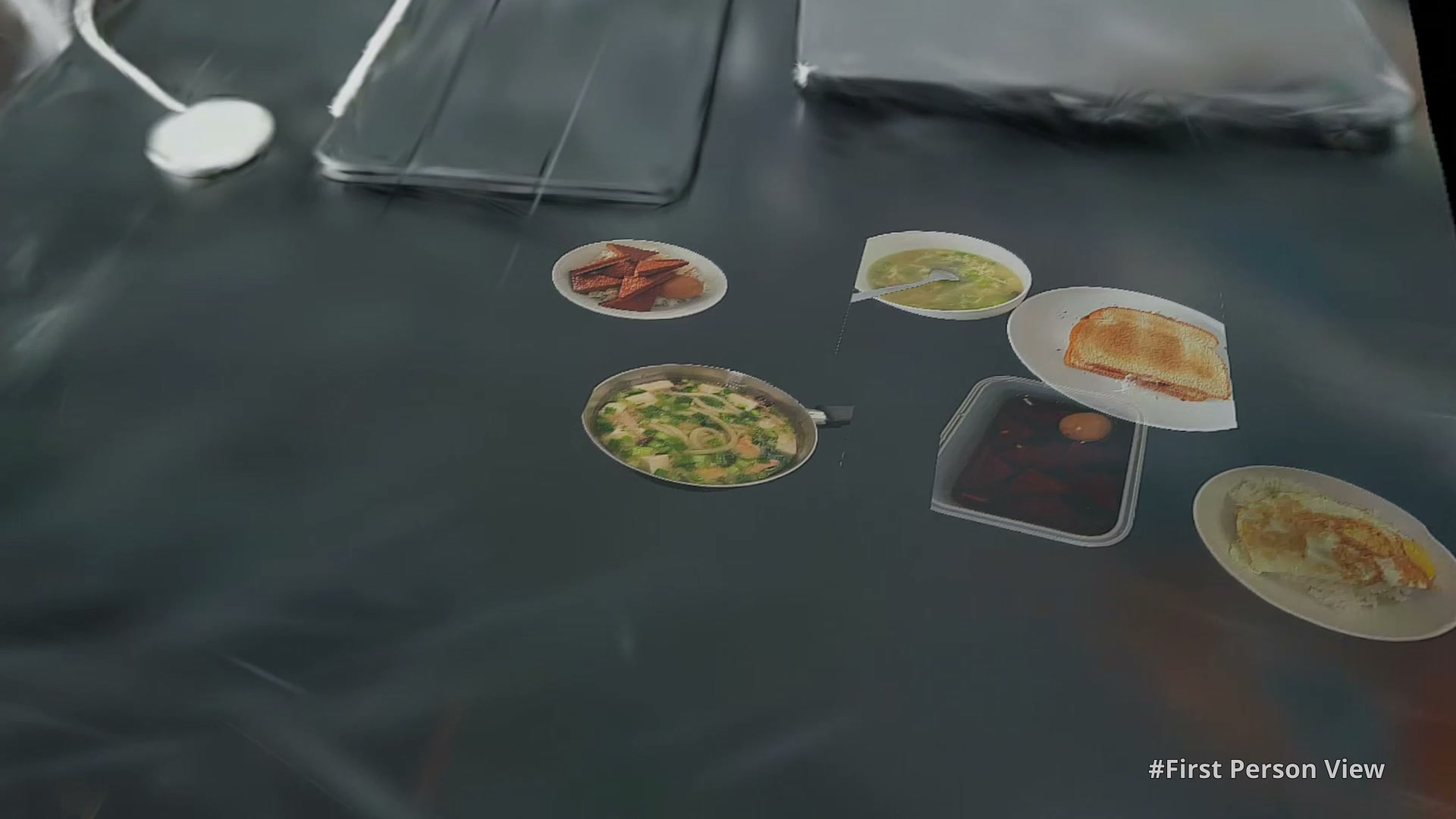
Select Memory (Carousel)
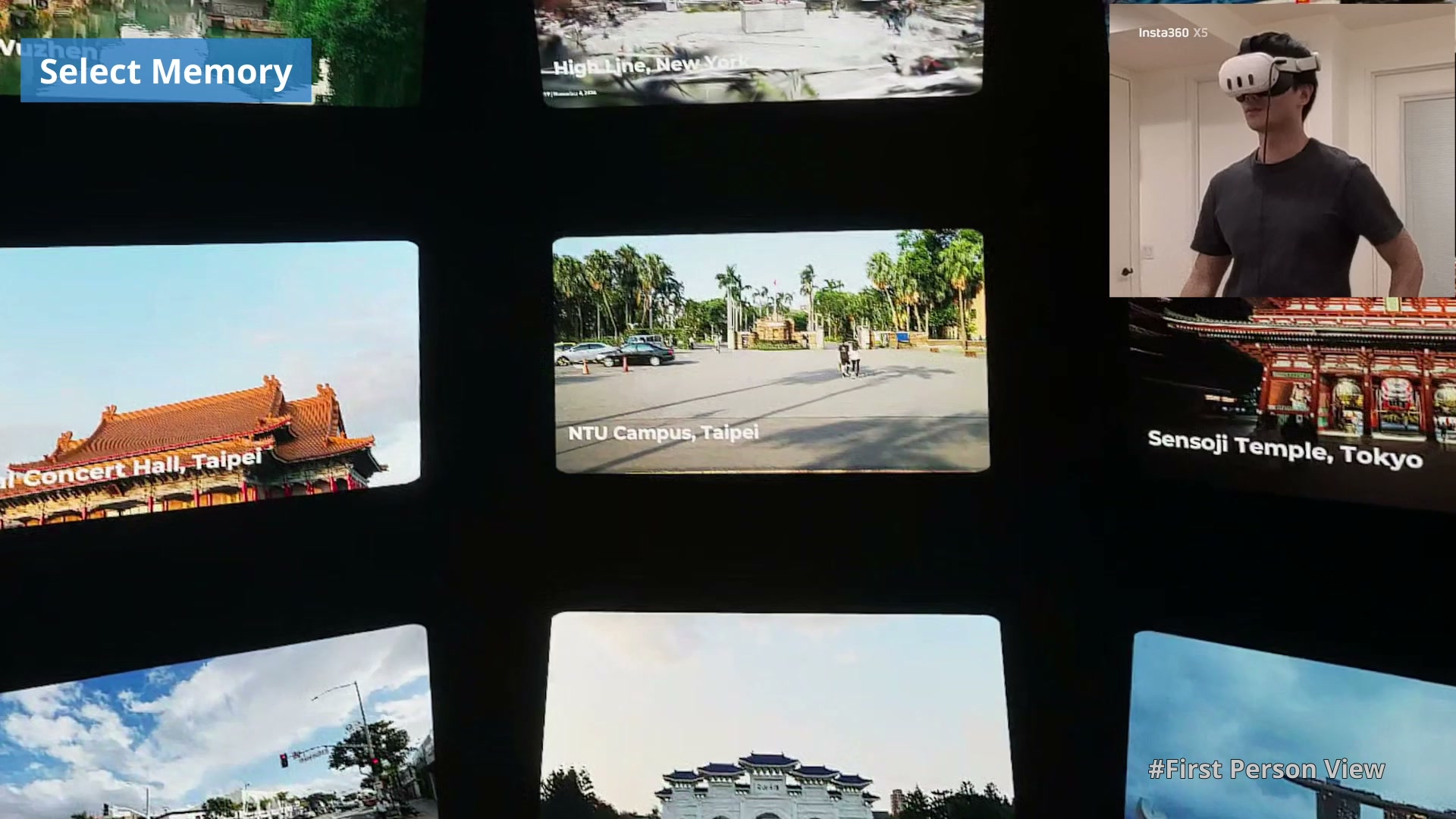
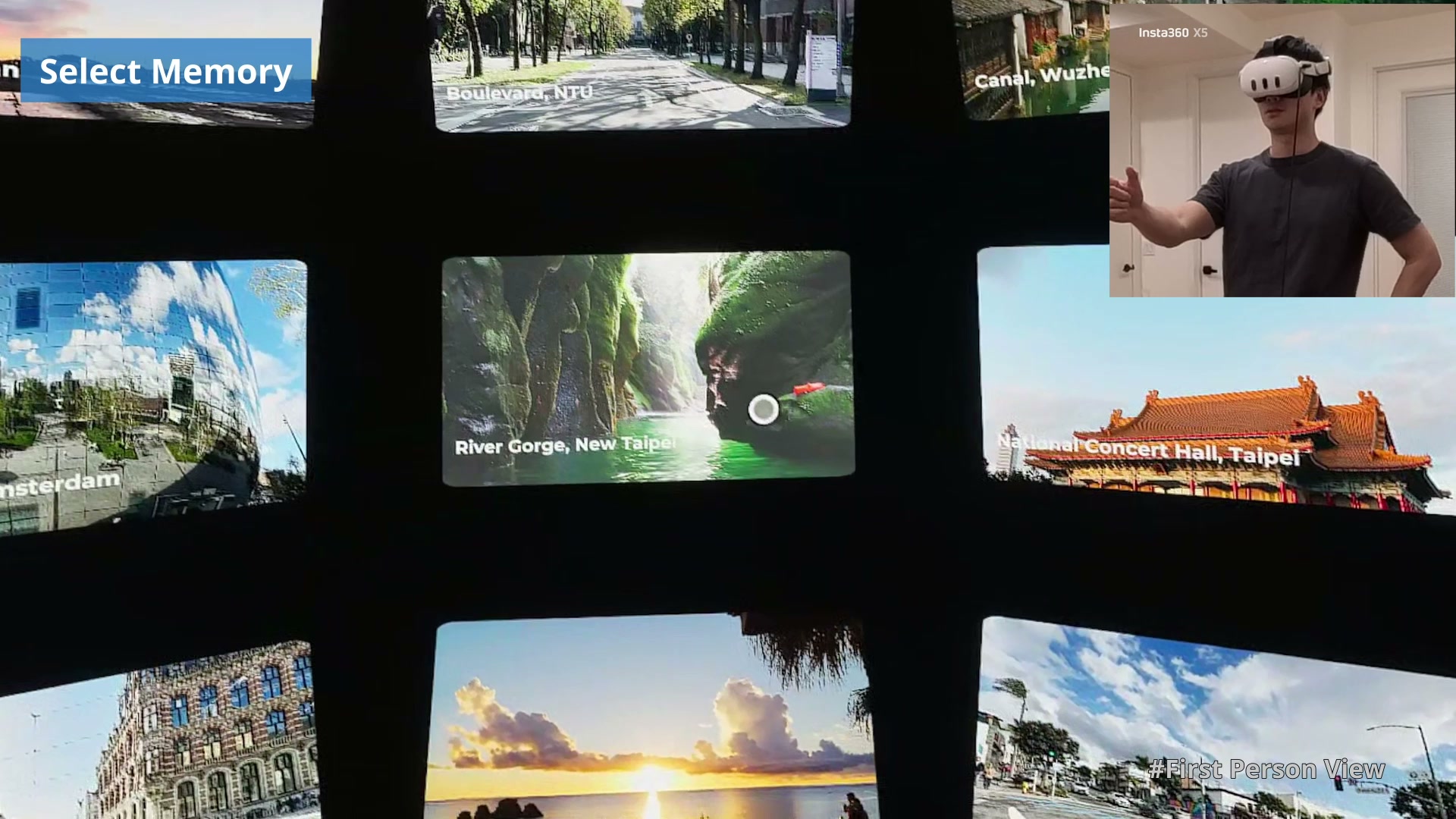
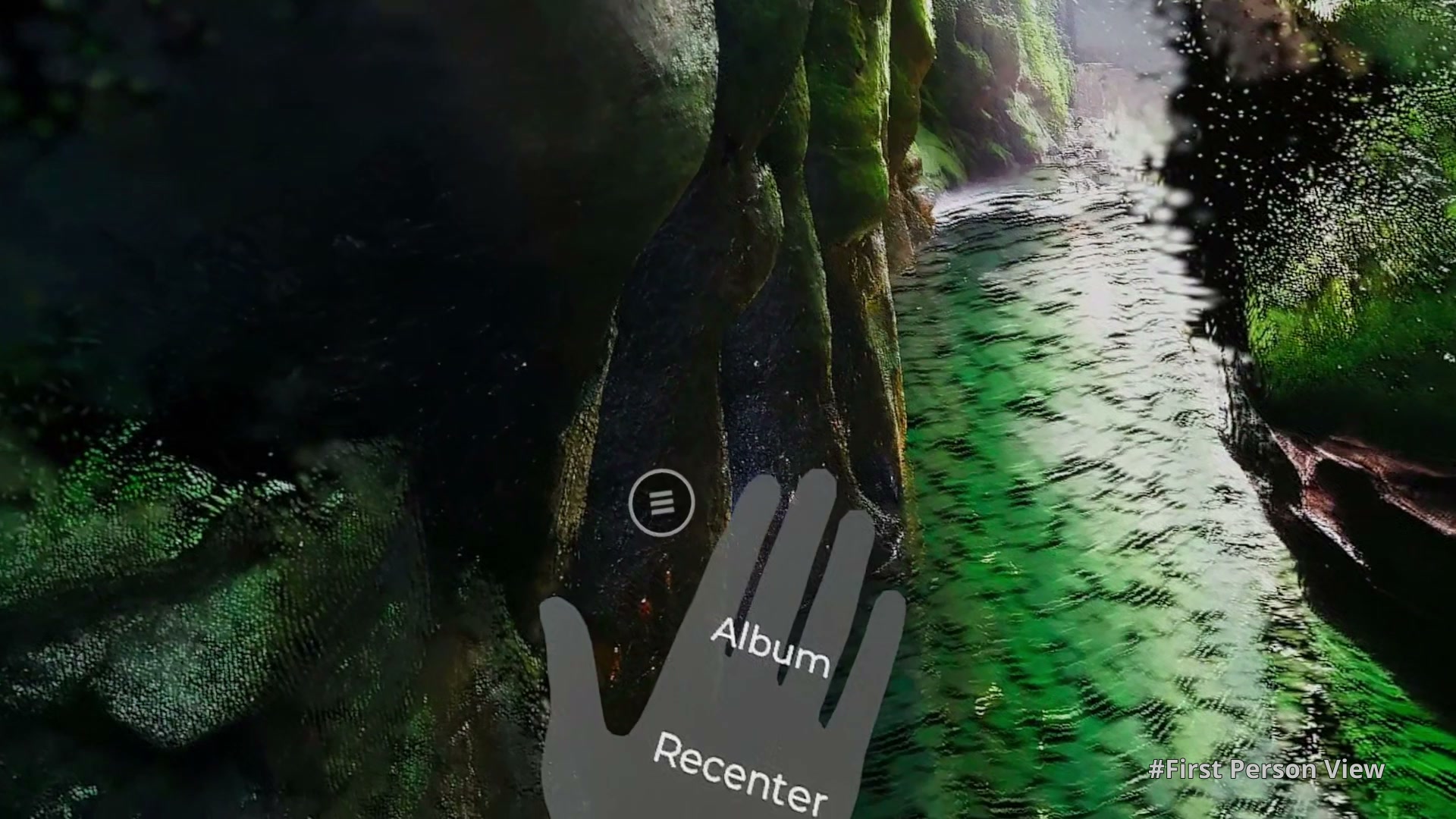
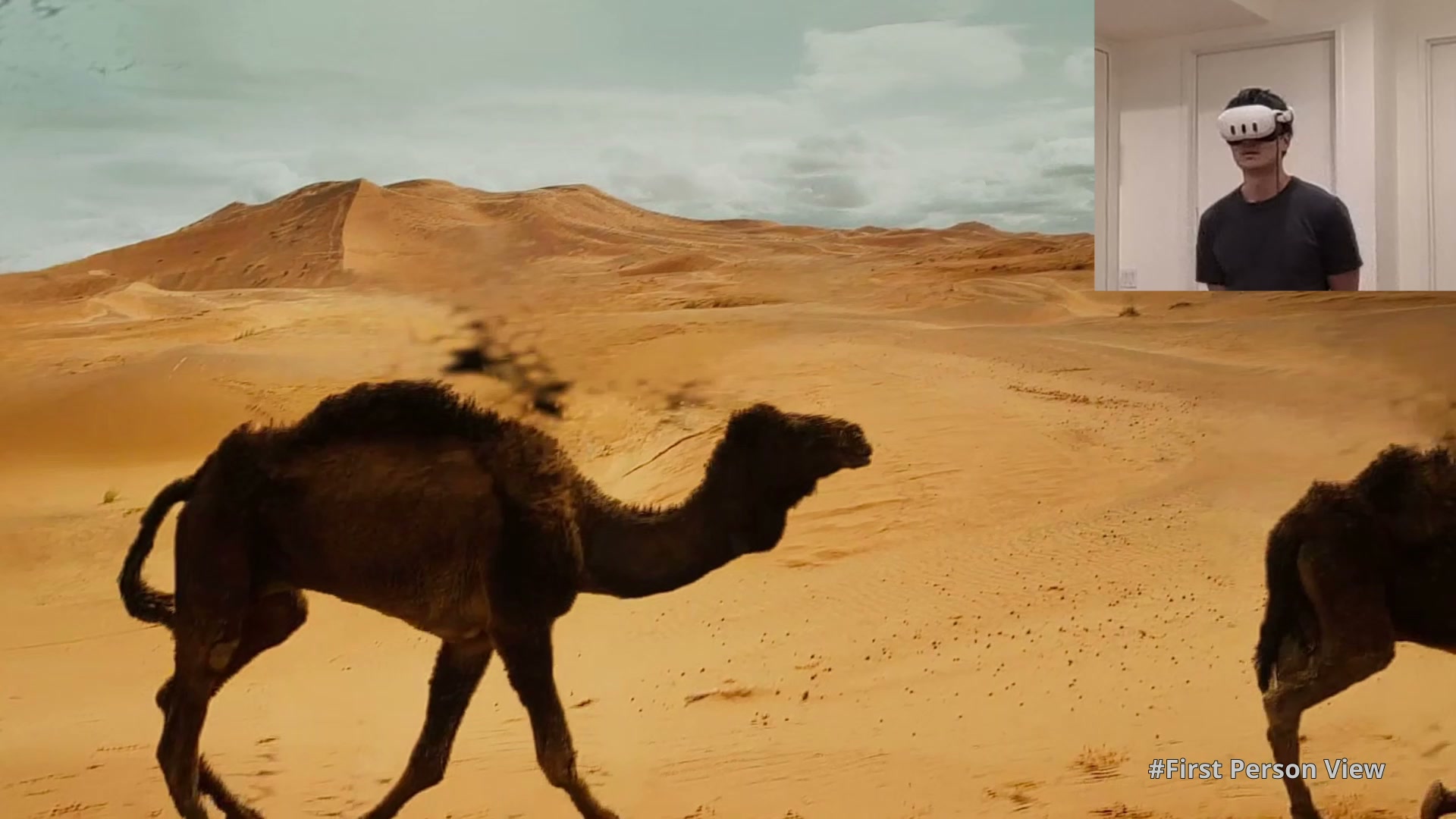
Entering Spaces
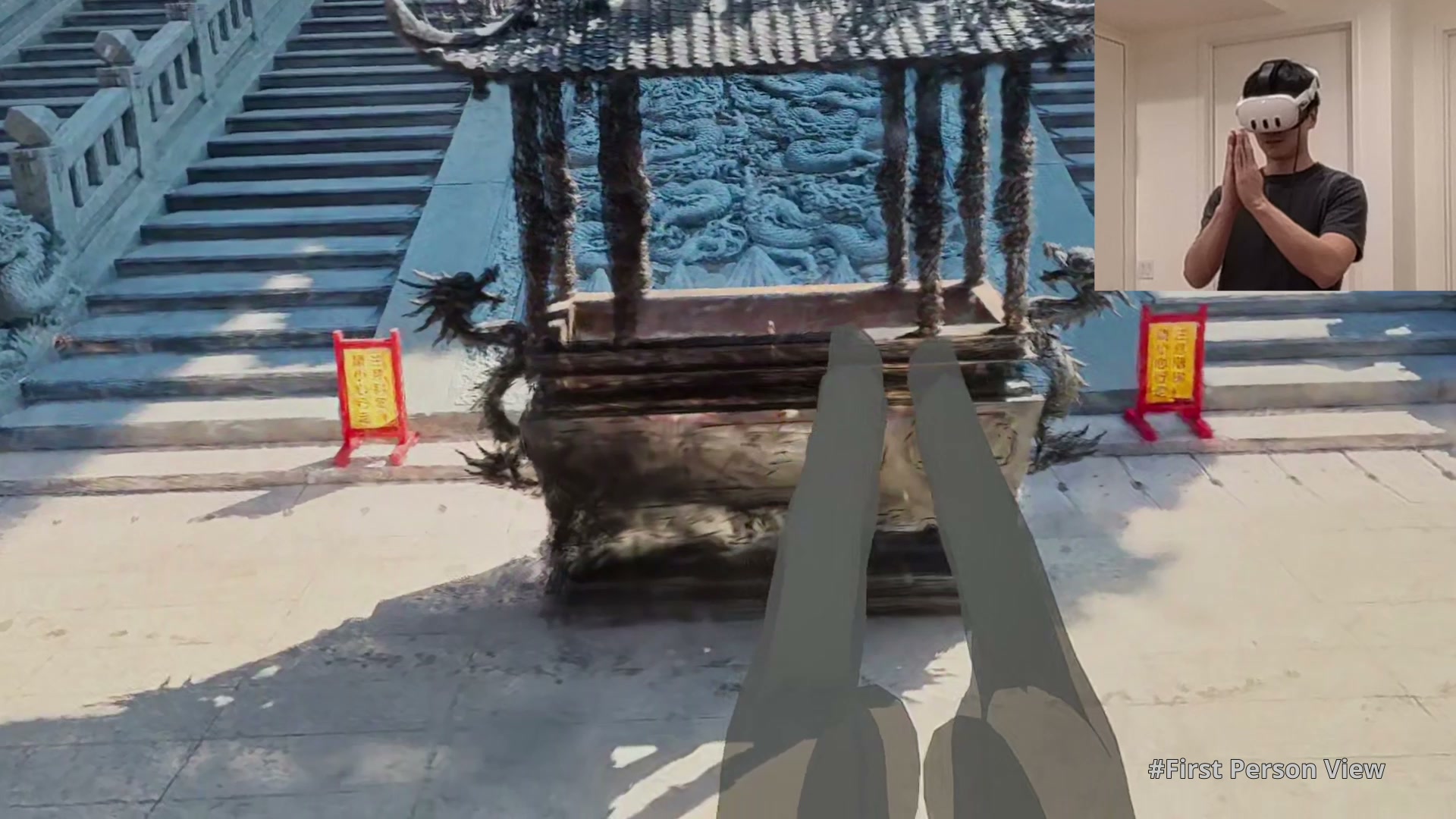
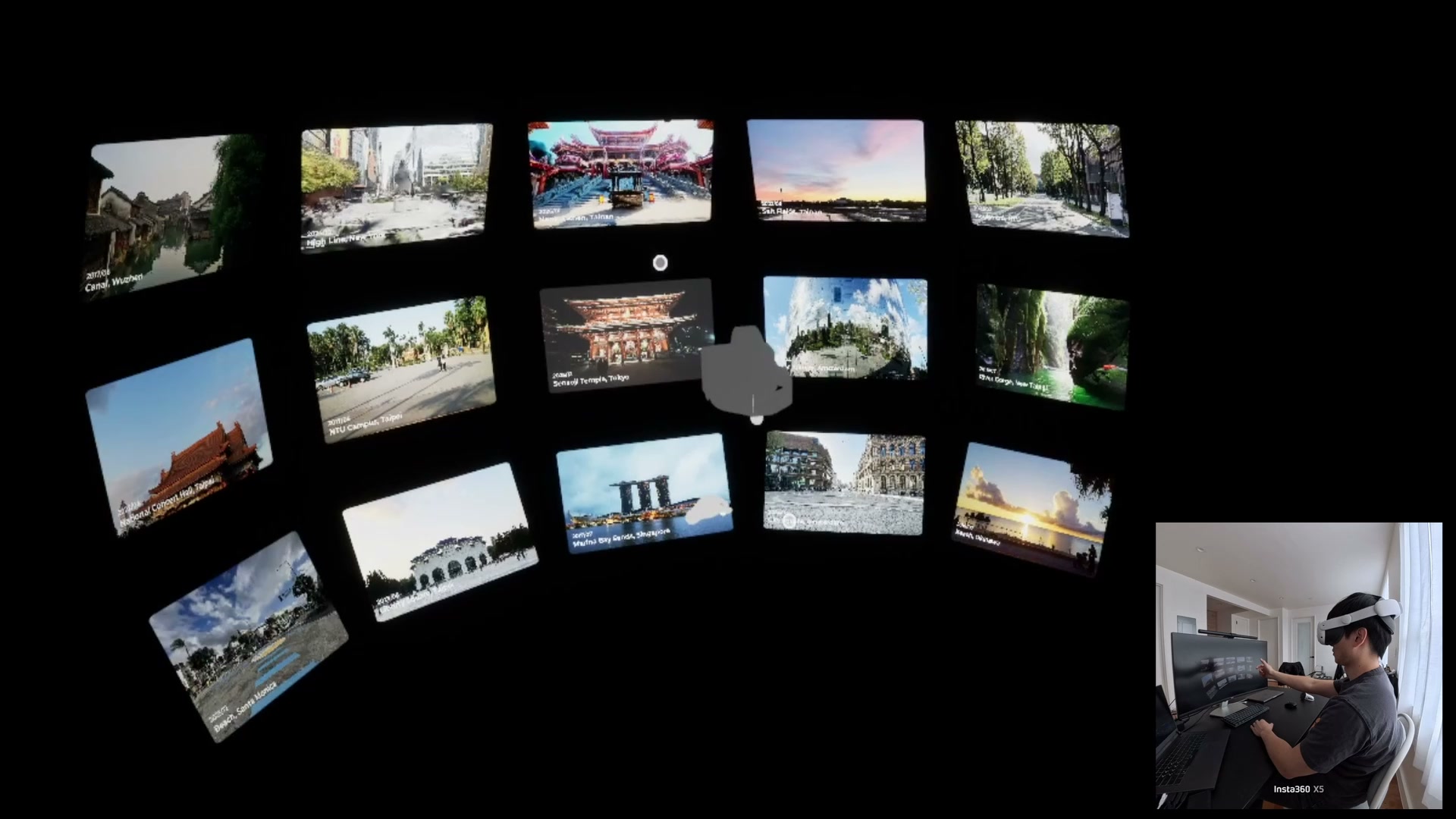
Test 2: Interaction Detail
Demo Day Feedback
Everything worked. The onboarding, the carousel, the level streaming, the hand tracking, all of it ran without breaking. People put on the headset, learned the gestures, browsed the archive, and stepped into captured spaces. Technically, the demo was solid.
But the feedback told me something I already half-knew: the experience had no soul.
The Feedback from Professor
The mid-term review was mostly positive on execution. Creative application of tools was rated “Exceeds Expectations,” and iteration, trajectory, and articulation were all above baseline. But the comments kept circling back to the same thing. “What is the question?” appeared twice on the feedback sheet. They genuinely couldn’t find it in the experience.
Their notes:
- The VR photo album needs more grounding. Why does it exist? What are you exploring?
- How are the memories categorized? Could the mapping be more dynamic?
- More play and experimentation with immersion, embodying, memory
- Are they sharing?
He could see I had built something technically ambitious. But he couldn’t see why.
What Peers Said
Two peer reviews, both positive on the tech, both pointing to what’s missing.
One reviewer loved the 3D environments (“those were my favorites”) but found the navigation gestures unnatural. They wanted to physically walk around inside the spaces but were scared of bumping into real-world furniture. That tension between wanting to move freely and being trapped in a small physical room is something I need to think about.
The other reviewer was genuinely surprised: “WOW this is so cool, I honestly don’t know how you created this.” They said the interaction felt organized and smooth. But they wanted sound. They couldn’t hear audio (or there wasn’t enough), especially in outdoor spaces. They also suggested practical things: a center dot for motion sickness, an exit function. Small things, but they matter for comfort.
What I Heard
Everyone said the same thing in different ways. The technology impressed people. The 3DGS spaces felt real, the hand tracking felt novel, the carousel was clean. But nobody knew why they were there. 19 spaces with no narration, no context, no personal layer. You enter a captured room and think: OK, this is a room. Now what?
The feedback wasn’t about bugs or broken features. It was about everything I hadn’t built yet: the voice, the story, the reason to care. A frozen scan of a place, no matter how accurate, doesn’t carry what made that place matter to someone. That’s exactly what the thesis is about, and the demo proved it by its absence.
Direction: Guided Spatial Narration
The Shift
From: “Here are 19 places. Pick one.” To: “Let me take you into my memories. Here’s what this place means to me.”
1. Curate the Archive
Select spaces that genuinely carry meaning or have interesting stories. Quality over quantity. Each space needs a reason to exist in the experience.
2. Voiceover Narration (ElevenLabs)
Each space gets a personal voiceover. Two possible types:
- Level-wide: Plays on entry. “This is NTU. That building on the right is the theater department where I spent most of my time.”
- Localized (TBD): Triggered by proximity to specific objects or areas. “This is my desk. I spent a lot of late nights here.”
The narration isn’t a tour guide. It’s sharing a memory. The tone should feel like telling a friend about a place that matters to you.
3. Lighting as Emotion
Each space will have intentional UE lighting that matches the mood and the narration. The Okinawa beach gets warm, low-angle sunset light. The user hears: “When I see a sunset, I always look at my hands, to see the color and warmth of the light on my skin.” And maybe they do the same.
The lighting isn’t decoration. It’s how a lighting designer remembers spaces.
4. Palm Menu Rework
Current palm menu is too close in VR, hard to interact with. Plan: float the menu in front of the user (similar to onboarding’s SnapToHMD positioning) instead of anchoring it to the palm. Trigger method TBD, possibly still palm-facing detection but with the UI appearing at comfortable distance.
5. Onboarding Redesign
Depends on final interaction design. Deferred until core experience is settled.
Technical Prep
Narration System (TS)
- Level-wide audio: reuse SpawnSound2D pattern from onboarding
- Audio state management: prevent overlapping voiceovers
- Localized audio (if implemented): BP trigger volumes with TS callbacks
Palm Menu (BP + TS)
- Reposition from palm-attached to HMD-forward
- SnapToHMD logic already exists in TS_Onboarding
Lighting (UE Editor)
- Per-level lighting design (manual, artistic work)
- Existing per-level light fade system supports this
Progress: Curation & Spatial Audio (3/21)
Archive Curation Complete
Curated the archive from 19 spaces down to 8. The criteria: spaces that carry genuine personal meaning or have stories worth sharing.
Final 8 spaces:
| # | Space | Date |
|---|---|---|
| 1 | Beach, Okinawa | 2018/07 |
| 2 | National Concert Hall, Taipei | 2022/04 |
| 3 | NTU, Taipei | 2022/02 |
| 4 | Nankunshen, Tainan | 2026/01 |
| 5 | Sanheyuan, Tainan | 2019/07 |
| 6 | Apartment, Brooklyn | 2024/09 |
| 7 | Rooftop, Brooklyn | 2024/10 |
| 8 | Home, Taipei | 2024/03 |
Merged the three tabs (Travel, Personal, Motion) into a single “Archive” tab. The distinction between categories felt arbitrary for 8 spaces. Now the viewer sees all spaces at once in a 2x4 grid.
Spatial Audio
Added directional ambient sound per space. Each space now has a spatialized audio source: walk toward a corner and the sound gets louder, walk away and it fades. The audio fades in/out with the GS environment (entering a space, opening/closing the carousel).
This is the first step toward the “sound as part of the space” concept from Section 3.4: restoring the ambient texture that 3DGS freezes out.
Palm Menu Repositioned
Moved the palm menu from the hand surface to floating in front of the HMD. Solves the “too close to face, hard to interact with” issue from Demo Day feedback.
Onboarding Paused
Onboarding flow disabled while the interaction model is being reworked. The carousel is directly accessible now.
Goals This Week
- Post-Demo Day reflection and direction planning
- Select and curate final spaces
- Begin writing voiceover scripts
- Paper: background and context sections (Class 8 requires 8-12 pages)
- Talk to someone with relevant expertise about the project
What’s Next
The second half is about transforming a technical demo into a meaningful experience. The carousel, streaming, and gesture systems are solid. Now the work is: which spaces, what stories, what feelings.